
Slide background

Custom Cut Steel Sheet and Plate

Order your custom-cut metal sheets in just a few clicks!

Filter the characteristics and find the material you need !

You have a project in mind ? By checking the different criteria below, you will refine your search and configure your metal plate in a few steps !

Properties

Usage and Applications

Finish & Appearance

Look

Material

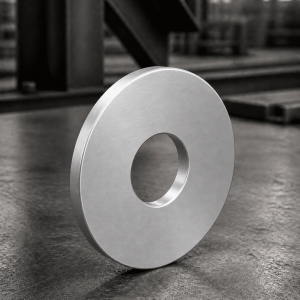
Aluminium brut et brillant 5754H111
4.8 (69 avis)
  • Light
  • Solid
  • Anti-corrosive

From
43.32
VAT incl
Personnaliser la pièce
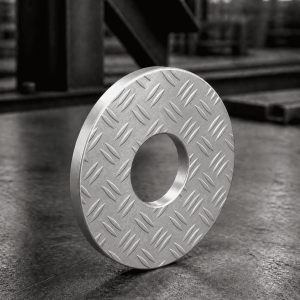
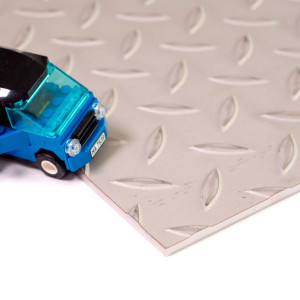
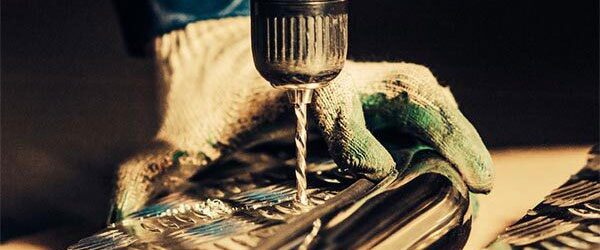
Acier brut antidérapant S235JR
5.0 (73 avis)
  • Very good for welding
  • Good mechanical strength
  • Wear and shock resistant

From
43.32
VAT incl
Personnaliser la pièce
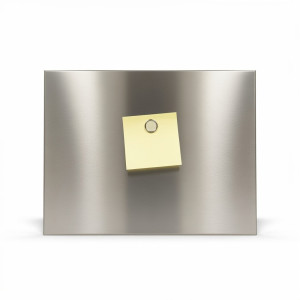
Plaque d'acier galvanisé
4.9 (93 avis)
  • Hot galvanised
  • Doesn't rust
  • Mechanical resistance

From
39.78
VAT incl
Personnaliser la pièce

About our range of metal plates

John's advice: choosing the right metal plate
John,
Expert in Metallurgy and Precision Cutting

John's advice: choosing the right metal plate

Unsure whether to choose steel, stainless steel or aluminium for your custom-cut project? Each metal has its strengths. Raw steel (2 to 20 mm) is the most affordable and strong, but it will rust without treatment. Galvanised steel (1 to 3 mm) is zinc-coated and won't rust. Corten steel (1.5 mm) develops an orange patina outdoors. Stainless steel (1 to 10 mm) is the champion of hygiene and corrosion resistance. Aluminium (1 to 10 mm), much lighter, is ideal for vertical installation.

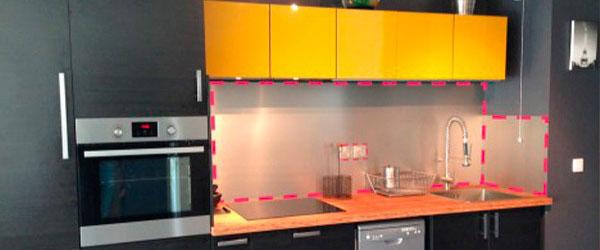
💡 Workshop tip: for a kitchen backsplash, choose brushed stainless steel (1 mm) for heat resistance or anti-fingerprint aluminium (1.5 mm) if you cook less with gas. For outdoor projects, aluminium or 316L marine stainless steel are essential: they withstand sea air and moisture. Raw steel must be painted or treated for outdoor use.

For installation, adhesive sealant is ideal for wall applications: no drilling needed. For flooring or heavy applications (manhole covers, road plates), use mechanical fixings. Don't forget to order our microfibre cloths for stainless steel care.

Choosing a custom kitchen splashback is about more than just aesthetics. The material, thickness, your hob configuration, and wall constraints all play a vital role. This guide provides the technical criteria to help you make an informed choice before configuring your order: the right material for your needs, precise dimensions, seamless installation, and effortless maintenance.


Choosing the Right Material for Your Custom Splashback

Every kitchen has its own challenges: heat, steam, grease splashes, and decorative style. The two main material families available for a custom-cut kitchen splashback are stainless steel and aluminum.

  • Stainless Steel: Heat-resistant, non-porous, and easy to clean.
  • Aluminum: Offers an excellent strength-to-weight ratio and is highly cost-effective.

Brushed vs. Polished Stainless Steel: Which to Choose?

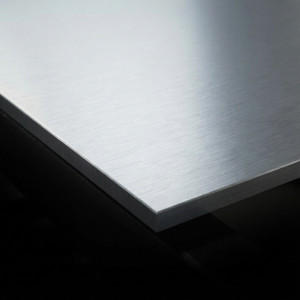
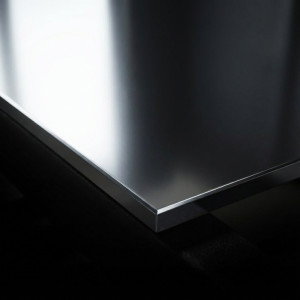
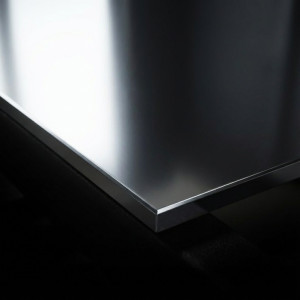
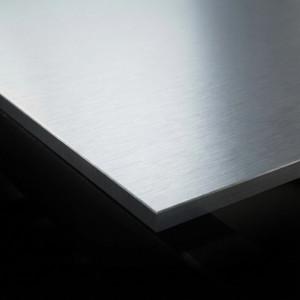
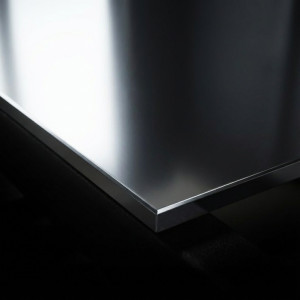
A brushed finish is better at concealing fingerprints and splashes, making it the ideal choice for busy kitchens. A polished finish (mirror effect) is highly decorative but more sensitive to marks and smudges.

Criteria Brushed Stainless Polished Stainless
Appearance Satin Mirror
Fingerprints Less visible Highly visible

Custom Splashbacks and Hob Compatibility

Behind a gas hob, stainless steel is essential due to its high heat resistance. Behind an induction hob, aluminum is perfectly suitable.

Installation and Maintenance of Your Splashback

Installation can be done directly over existing tiles, provided they are clean and level. For maintenance, use a microfibre cloth. For brushed stainless steel, always wipe in the direction of the grain.

Frequently Asked Questions

What thickness should I choose? A 1 mm thickness offers the best balance of rigidity and weight for both stainless steel and aluminum splashbacks.

Can it be installed over tiles? Yes, as long as the tiles are securely fixed and the surface is flat.

Our #Steelsters have talent